2026 How to Use Heavy Duty Shrink Wrap for Packaging and Protection?
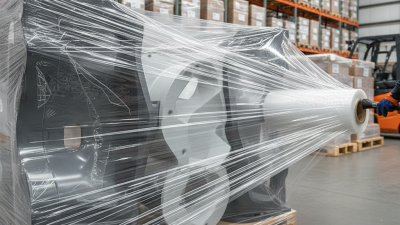
In 2026, the packaging industry continues to evolve, and Heavy Duty Shrink Wrap plays a vital role. This material provides superior protection for various products, including machinery and furniture. According to recent industry reports, the global shrink packaging market is expected to grow by over 5% annually. This illustrates the increasing demand for effective and reliable packaging solutions.
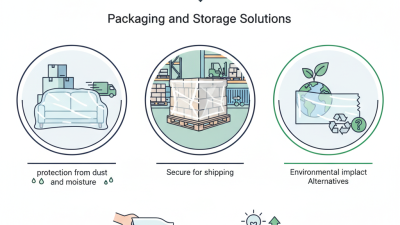
Heavy Duty Shrink Wrap is not just durable; it is also versatile. It helps safeguard items from moisture, dust, and UV rays. Such features are critical for preserving product integrity during transportation and storage. Companies often rely on it to prevent damage and reduce waste. However, some users may overlook proper application techniques, leading to ineffective results.
Understanding the best practices for using Heavy Duty Shrink Wrap is essential. It goes beyond merely enclosing an item. Factors such as heat application and film selection are crucial. Imperfections in usage can lead to missed opportunities for enhanced protection and efficiency. Exploring these aspects can truly elevate packaging standards in various industries.

Understanding Heavy Duty Shrink Wrap: Materials and Specifications
Heavy-duty shrink wrap is an essential tool for packaging and protecting various products. Understanding its materials and specifications is crucial. Common materials include polyethylene and PVC. These materials provide robust protection against environmental factors. Reports indicate that the market for shrink films is projected to grow at a CAGR of 4.5% through 2026. This growth highlights the importance of selecting the right type of shrink wrap.
When considering specifications, thickness plays a vital role. Most heavy-duty shrink wraps range from 60 to 100 microns. Thicker wraps provide better durability. However, they can be more challenging to work with. Proper training in application techniques is necessary to avoid waste. Industry data shows that improperly applied shrink wrap can lead to product damage. Ensuring a snug fit is essential.
Heavy-duty shrink wrap also varies in shrink temperature. Some products require higher heat to achieve optimal shrinkage. Understanding these details helps in achieving the best seal. Many companies overlook the importance of testing shrink wrap in real-world scenarios. Regular assessments can reveal flaws or weaknesses. Adapting to these findings is key for successful packaging solutions.
Usage of Heavy Duty Shrink Wrap in Different Industries
Key Benefits of Using Heavy Duty Shrink Wrap for Packaging Solutions
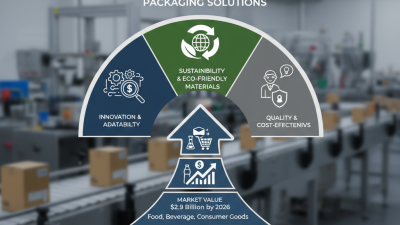
Heavy duty shrink wrap is becoming increasingly popular in packaging. The global market for shrink wrap is expected to reach
$23 billion by 2026. This growth is driven by its effectiveness in protecting products during storage and transport. One key benefit is its ability to create a
tight seal that keeps out moisture and dust. According to industry reports, using heavy duty shrink wrap can reduce product damage rates by
up to 30%.
Its versatility is another significant advantage. Heavy duty shrink wrap can be applied to various shapes and sizes. This makes it suitable for packaging everything from industrial machinery to delicate items. The shrink wrap adheres closely to the product, preventing movement during transit.
However, some users report challenges with heat application methods, which can vary greatly between materials. The eco-friendly aspect is also worth noting. Many manufacturers are producing
recyclable shrink wraps. This can help companies improve their sustainability goals. Implementing such solutions may lead to better customer perceptions.
However, users must remain aware of local recycling capabilities. Many products still face disposal challenges despite advancements.
Step-by-Step Guide to Properly Applying Heavy Duty Shrink Wrap
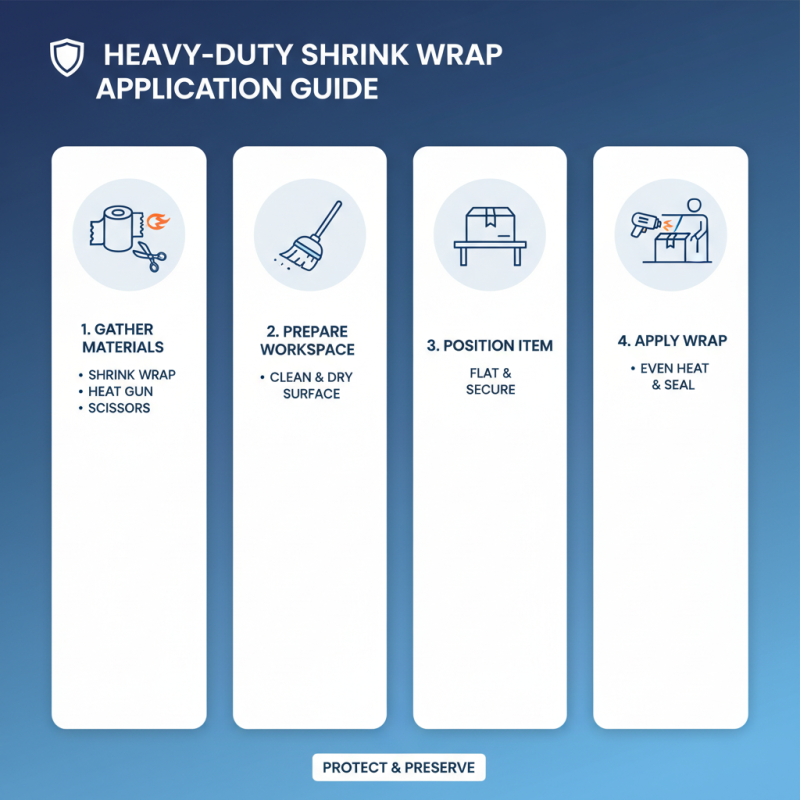
Heavy duty shrink wrap is a great solution for packaging and protection. Applying it correctly is crucial. First, gather your materials. You need the shrink wrap, a heat gun, and scissors. Make sure your workspace is clean. Dust can affect the seal. Lay the item on a flat surface. Ensure it's dry and free from debris. This preparation saves time later.
Next, measure the shrink wrap. Cut a piece that is larger than your item. Leaving excess material ensures a proper seal. Begin wrapping the item tightly. Make sure to overlap the edges slightly. Smooth out any wrinkles as you go. This prevents air pockets. Once wrapped, use the heat gun to apply heat evenly. Keep the gun moving to avoid burning the wrap. Watch closely for shrinking. It should snugly fit around the item.
There might be challenges during this process. Maybe the wrap isn’t sticking or it tears easily. If this happens, don’t panic. Take a moment to reassess. Perhaps you need a longer piece or to adjust your technique. Experimenting can lead to improvements. Each project will teach you something new about the material and your method.
Industry Best Practices for Storing and Handling Shrink Wrapped Products
When it comes to storing and handling shrink-wrapped products, a few industry best practices can help ensure longevity and protection. Proper temperature control is essential. Heat can weaken the wrap, leading to tears or a poor seal. Storing items in a cool, dry place can make a significant difference. Moisture can also cause problems, so avoid areas with high humidity.
Handling shrink-wrapped items requires care. Rough handling can create stress points on the wrap, increasing the risk of damage. Always lift items gently. Be cautious when stacking goods. An improper stack can lead to crushing, even if that shrink wrap looks sturdy. Regular checks are advisable to ensure that the wrap remains intact and is doing its job.
If you notice signs of wear, address them immediately. Waiting could lead to bigger issues later. Understanding the right handling methods is key to protecting inventory. Rushing through the wrapping or storage process often leads to mistakes. A little bit of patience can save a lot of trouble down the line.
Analyzing the Environmental Impact of Heavy Duty Shrink Wrap Usage
The use of heavy duty shrink wrap has become common in many industries for packaging and protection. However, its environmental impact raises important questions. According to a 2021 report by the Environmental Protection Agency, around 1.3 million tons of plastic film waste is generated annually in the U.S. alone. Much of this material is not recycled, contributing to landfills and ocean pollution.
While heavy duty shrink wrap offers benefits in durability and cost-effectiveness, its production and disposal pose significant challenges. Polyethylene and PVC, common materials used in shrink wraps, can take up to 1,000 years to decompose. This creates a long-lasting presence in landfills. Moreover, incinerating plastic can release harmful toxins. A study from the National Oceanic and Atmospheric Administration found that microplastics from such waste affect marine life and ecosystems.
Recycling initiatives exist, but participation remains low. A 2022 survey revealed that only 9% of plastic film is recycled in the U.S. This indicates a missed opportunity for manufacturers and consumers. The need for innovation in sustainable alternatives is apparent. Heavy duty shrink wrap's convenience may come at a cost that is increasingly hard to ignore. As industries strive for greener solutions, it is vital to reflect on current practices and their ramifications on our planet.
2026 How to Use Heavy Duty Shrink Wrap for Packaging and Protection? - Analyzing the Environmental Impact of Heavy Duty Shrink Wrap Usage
| Dimension |
Data |
| Average Thickness (microns) |
150 |
| Recyclability Rate (%) |
30 |
| Decomposition Time (years) |
500 |
| Production Energy (MJ/kg) |
80 |
| Usage in E-commerce (%) |
25 |
| Secondary Use Potential (%) |
15 |